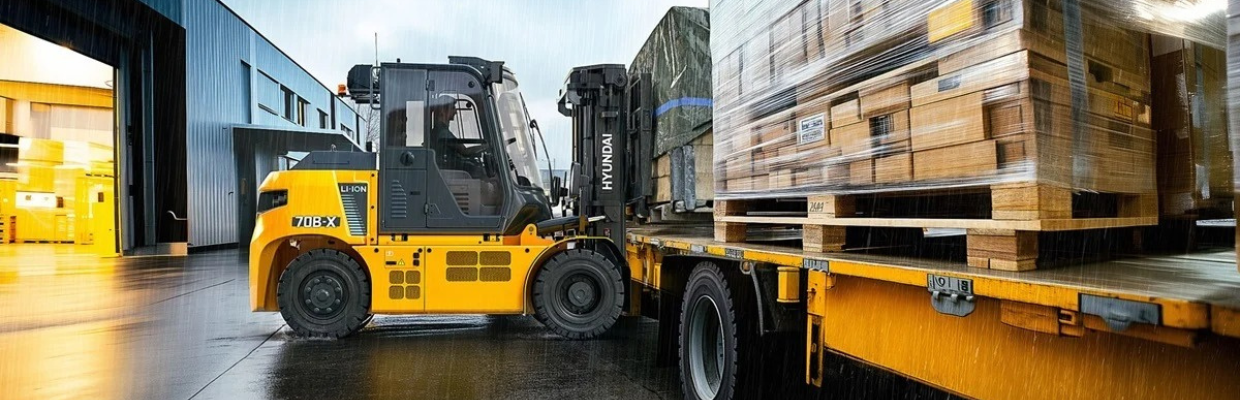
Choosing a forklift is about more than lift capacity, mast height and equipment price. The power source can affect almost every part of the operation, including equipment availability, employee time, facility requirements, energy expenses, maintenance and long-term fleet costs.
Lead-acid batteries and internal-combustion forklifts remain appropriate for many applications. However, developments in lithium-ion technology have changed the business case for electric equipment, particularly in operations with high utilization, multiple shifts or frequent opportunities to recharge equipment.
Hyundai LFP lithium-ion forklifts offer an alternative designed to combine electric performance with flexible charging and simplified battery management. The question is not simply whether lithium-ion is newer technology. The more useful question is whether it provides measurable value for your specific fleet.
Leavitt Machinery can assess your current equipment, operating hours and energy requirements through a no-obligation fleet electrification review.
How Do the Three Power Sources Compare?
| Category | LFP Lithium-Ion | Lead-Acid | IC Forklifts |
|---|
| Charging or Refuelling | Fast and opportunity charging | Longer charging periods; battery cooling or changes may be needed | Rapid fuel or propane replacement |
|---|
| Battery Maintenance | No routine watering or equalization | Regular battery maintenance and watering required | Not applicable |
|---|
| Equipment Maintenance | Standard electric-truck maintenance | Standard electric-truck and battery maintenance | Engine, cooling, exhaust and fuel-system maintenance |
|---|
| Multi-Shift Operation | Well suited when charging opportunities exist | May require spare batteries or battery changes | Well suited when fuel is readily available |
|---|
| Lifecycle Cost | Can be favourable in high-use fleets | Can be economical in lighter-duty fleets | Influenced by fuel use and engine maintenance |
|---|
Battery-electric equipment produces no tailpipe emissions at the point of use. Overall environmental impact still depends on factors such as the electricity source, battery production, equipment utilization and end-of-life practices. The EPA has also identified lower noise and the need to reduce indoor pollutants as reasons battery-electric powertrains are increasingly used in forklift applications.
What Is an LFP Lithium-Ion Battery?
Lithium Iron Phosphate, commonly shortened to LFP, is one type of lithium-ion battery chemistry. LFP batteries are recognized for their cycle-life potential, stable power delivery and comparatively strong thermal stability.
An industrial LFP battery is typically paired with a battery-management system that monitors operating conditions such as voltage, temperature and state of charge. The battery, equipment and charger are designed to work together as an integrated system.
This is different from a conventional flooded lead-acid battery, which contains liquid electrolyte and requires established charging, watering and maintenance procedures. Canadian occupational-safety guidance notes that lead-acid batteries contain sulfuric acid and can release hydrogen and oxygen gases while charging.
Why Are More Operations Considering Lithium-Ion Forklifts?
The potential value of lithium-ion does not come from a single feature. It comes from how charging, battery maintenance and equipment availability work together.
1. Charging Can Fit Around the Operation
Opportunity charging allows operators to connect the forklift to a compatible charger during scheduled breaks, shift changes or other periods when the equipment is not being used.
This can reduce dependence on one long charging window at the end of a shift. In the correct application, regular short charging sessions can help keep equipment operating across extended or multi-shift schedules without exchanging batteries.
Hyundai promotes several lithium-ion-ready products with fast and intermittent charging capabilities. Actual charge rates and recommended charging practices depend on the battery, charger, operating temperature and equipment model.
2. Routine Battery Maintenance Is Reduced
Flooded lead-acid batteries may require:
- Watering
- Electrolyte-level checks
- Equalization
- Terminal and corrosion inspections
- Cleaning
- Charging records
- Designated battery-handling procedures
Industrial lithium-ion batteries do not require routine watering or equalization. This can reduce the amount of employee time spent maintaining batteries and decrease the risk of inconsistent maintenance practices.
The distinction is important: the battery may be maintenance-free in terms of watering and equalization, but the forklift still requires its normal inspections and scheduled mechanical service.
3. Power Remains More Consistent
Lithium-ion batteries are designed to provide relatively consistent power throughout the usable discharge cycle. This can help maintain travel, acceleration and hydraulic performance as the shift progresses.
With conventional lead-acid systems, equipment performance can become less consistent as the battery is discharged, particularly if the battery is aging, undercharged or not being maintained correctly.
Consistent performance can be especially valuable in applications where equipment must repeatedly travel long distances, climb grades, handle heavy loads or meet demanding productivity targets.
4. Battery Changes May Be Reduced or Eliminated
Some multi-shift lead-acid fleets use spare batteries so depleted batteries can be removed and replaced.
This approach can require:
- Additional batteries
- Battery extraction equipment
- Battery storage space
- Employee training
- Time for changing batteries
- Charging and cooling schedules
A properly planned lithium-ion system may allow the battery to remain in the forklift while being recharged during operating pauses. The actual number of forklifts, batteries and chargers required should be determined through a duty-cycle analysis.
Understanding the Total Cost of Ownership
A purchase-price comparison alone may not show which power source offers the best value.
A complete total-cost-of-ownership review should include:
- Forklift acquisition cost
- Battery and charger cost
- Fuel or electricity use
- Scheduled maintenance
- Battery maintenance labour
- Replacement batteries
- Battery-changing equipment
- Charging or fuel infrastructure
- Equipment downtime
- Expected annual operating hours
- Residual value
- Applicable incentives or utility programs
Lithium-ion equipment commonly carries a higher initial investment. However, reductions in battery maintenance, downtime and replacement requirements may produce a more favourable lifecycle cost in high-utilization applications.
A lower-use, single-shift operation with an existing lead-acid charging area may produce a different result. This is why the fleet’s actual operating profile should drive the decision.
What About Safety?
LFP chemistry is generally considered more thermally stable than several nickel- and cobalt-based lithium-ion chemistries. However, all high-voltage battery systems contain stored energy and require properly designed equipment, approved chargers, trained service personnel and manufacturer-recommended operating procedures.
Lead-acid and IC equipment also present safety and facility considerations.
Lead-acid systems can involve:
- Sulfuric acid exposure
- Hydrogen gas during charging
- Heavy battery handling
- Electrical hazards
- Specialized charging areas
IC fleets can involve:
- Fuel handling and storage
- Exhaust emissions
- Hot engine and exhaust components
- Ventilation requirements
- Propane-cylinder handling
The objective should not be to describe one power source as having no risks. It should be to select a power source whose risks, infrastructure and operating requirements can be effectively managed in the customer’s facility.
Is Your Fleet a Strong Candidate for Lithium-Ion?
Lithium-ion may deserve closer consideration when:
- Forklifts operate for extended hours or over multiple shifts.
- Equipment regularly pauses during breaks or shift changes.
- Battery changes are affecting productivity.
- Battery watering and maintenance consume significant labour.
- The operation has limited room for battery storage or charging areas.
- Fuel costs are increasing.
- The business wants to reduce point-of-use emissions.
- Consistent equipment performance is important throughout the shift.
- The company is replacing several forklifts or planning a new facility.
A site may require electrical upgrades or additional chargers before converting. Leavitt can evaluate these requirements before equipment is ordered.
Why Hyundai Lithium-Ion Equipment?
Hyundai offers a growing selection of electric and lithium-ion-ready material handling equipment intended for warehouse, manufacturing and logistics applications. Depending on the model, available features may include fast charging, opportunity charging and integrated battery-management capabilities.
The specific battery capacity, charger, operating duration and warranty should always be matched to the customer’s application.